
Hip flexor pain usually shows up as a pull or ache at the front of the hip, right where the thigh meets the pelvis. It tends to flare with running, kicking, climbing stairs, or standing up after sitting for a long time. Kinesiology tape can make the area feel more supported while you stay active and recover.
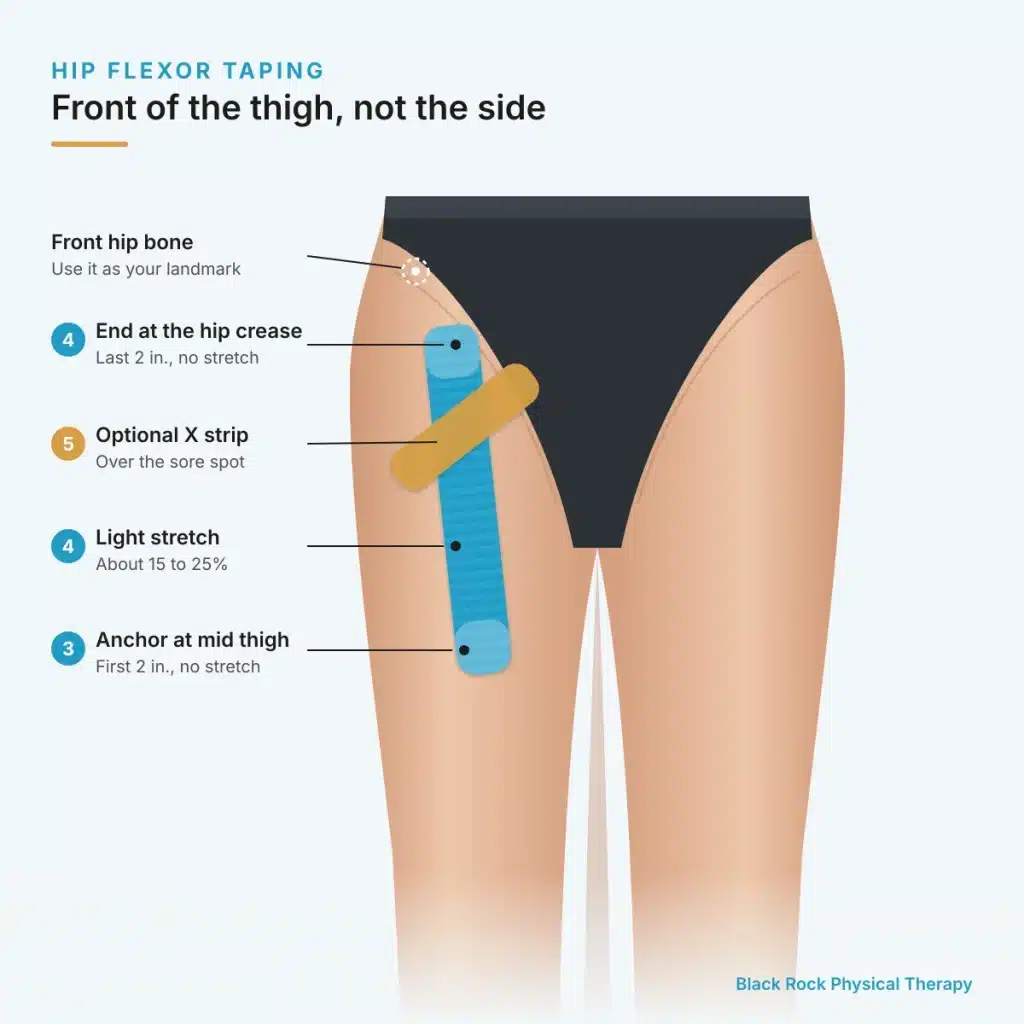
Quick answer: To KT tape a hip flexor, step back into a gentle lunge to stretch the front of the hip. Anchor one strip on the front of the thigh with no stretch, lay it up toward the front of the hip bone with light stretch, and finish the last two inches with no stretch. Add a short second strip across the most tender spot if you need it, then rub the tape to activate the adhesive.
This guide from the physical therapists at Black Rock Physical Therapy in Grantsville, UT walks through each step. If your pain is more on the side of the hip, or you are dealing with bursitis, see our full KT tape for hip pain guide, and browse all of our KT taping guides for other areas of the body.
What Your Hip Flexors Do and Why They Hurt
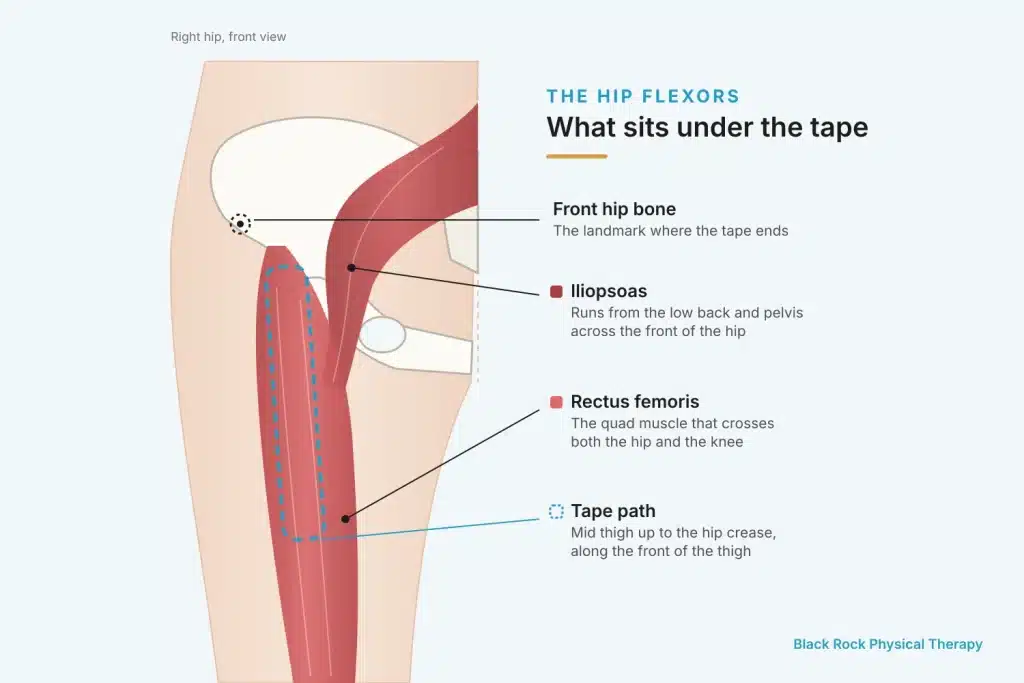
Your hip flexors are the muscles at the front of the hip that lift your knee toward your chest. The main ones are the iliopsoas (the psoas and iliacus working together) and the rectus femoris, the one quadriceps muscle that crosses both the hip and the knee.
Hip flexor pain usually comes from one of two things:
- A strain. Sprinting, kicking, hill running, or a sudden slip can overload the muscle. You may feel a sharp, pinpoint pain at the front of the hip, especially when you lift your knee.
- Overuse and stiffness. Long days of sitting keep the hip flexors in a shortened position. Paired with weak glutes or core muscles, that can turn into a dull, nagging ache.
Pain at the front of the hip is not always a hip flexor problem. Labral irritation, early arthritis, and pain referred from the lower back can feel similar, which is why a proper evaluation matters when pain lingers.
How to KT Tape a Hip Flexor in 6 Steps
What you need: kinesiology tape (a roll or precut strips), scissors, and clean, dry skin. Trim thick hair and skip lotion on the area that day.
- Prep the tape. Cut one strip about 10 inches long and round the corners so they do not catch on clothing. Cut a second strip about 4 to 5 inches long if you want extra support over a sore spot.
- Get into position. Stand and step the leg you are taping back into a small lunge, keeping your trunk tall. You should feel a light stretch at the front of the hip. Taping over a lengthened muscle keeps the tape from pulling when you move.
- Anchor on the thigh. Tear the backing about 2 inches from one end and press that end onto the front of the thigh, roughly mid thigh, with no stretch.
- Run the tape up the hip flexor. Peel off the rest of the backing, apply light stretch (about 15 to 25 percent), and lay the tape straight up the front of the thigh toward the front of the hip. Leave the last 2 inches unstretched and press it down at the hip crease, just below the bony point at the front of the pelvis.
- Add a support strip (optional). Find the most tender spot. Tear the second strip in the middle, stretch the center across the sore spot, then lay both ends down with no stretch so the two strips form an X.
- Activate the adhesive. Rub the full length of the tape for 20 to 30 seconds. The adhesive is heat activated, so wait 30 to 60 minutes before you work out, shower, or swim.
Kinesiology tape usually stays on for 3 to 5 days. To remove it, peel slowly in the direction of hair growth while holding the skin down. A little baby oil helps loosen stubborn edges.
When Taping Helps
Kinesiology tape does not repair a strained muscle or change the way you move. What it can do is change how the area feels, which helps many people stay active while they recover. Taping may help:
- Ease the tight, pulling feeling at the front of the hip
- Make walking, stairs, and getting in and out of the car more comfortable
- Build confidence when returning to running, sports, or the gym after a mild strain
- Remind you to move well during long workdays or drives
Tape works best alongside stretching, strengthening, and a gradual return to activity, not in place of them.
Taping Tips to Know
- Keep the ends relaxed. Anchors applied with tension are the most common reason tape peels or irritates the skin.
- More stretch is not better. Pulling the tape tight can blister the skin and does not add support.
- Protect your skin. Do not tape over cuts or irritated skin, and remove the tape if you notice itching, redness, or a rash.
- Check numbness first. If the front of the thigh feels numb or tingly, have it evaluated before taping.
- Ask before taping if you are pregnant or have diabetes, circulation problems, or fragile skin.
When to See a Physical Therapist
Tape is a helpful short term tool, but some hip flexor pain needs a hands-on evaluation. Schedule a visit if:
- You felt a pop, have visible bruising, or cannot lift your knee or walk normally
- Pain has not improved after one to two weeks of rest and taping
- Your hip clicks, catches, or locks, or the pain spreads into the groin
- You have numbness, tingling, or pain that travels down the leg
- The pain comes back every time you return to running or sports
Severe pain after a fall, or hip pain with fever, chills, or redness, should be checked by a doctor right away.
How Black Rock Physical Therapy Treats Hip Flexor Pain
Your first visit starts with a one-on-one evaluation of your hip strength, mobility, walking, and the movements that bring on your pain. From there, our team builds a plan that may include manual therapy, targeted strengthening for the hips and core, mobility work, dry needling, and kinesiology taping, plus a home program you can keep up with.
Learn more about our hip pain physical therapy in Grantsville, our approach to physical therapy, and how our sports medicine care helps athletes get back to play.
Hip Flexor Taping FAQs
How long should I leave KT tape on my hip flexor?
Most people wear it for 3 to 5 days. Take it off sooner if the edges lift, the skin itches, or you notice redness.
Can I tape my own hip flexor?
Yes. The front of the hip is easy to reach, so most people can apply this taping on their own. Standing in front of a mirror helps you keep the strip straight.
Can I run or work out with KT tape on my hip flexor?
Yes, once the adhesive has set for 30 to 60 minutes. If running still causes sharp pain, rest and have the hip checked rather than relying on tape.
Is this the same taping used for hip bursitis?
No. This application targets pain at the front of the hip. Bursitis usually causes pain on the outside of the hip and uses a different taping pattern.
Does KT tape heal a hip flexor strain?
No. Tape can make the area feel more supported, but healing comes from time, the right exercises, and a gradual return to activity. A physical therapist can guide that process and help keep the strain from coming back.
Get Your Hip Flexor Checked in Grantsville
If taping is not settling your hip flexor pain, our physical therapists can find out why and help you get back to moving comfortably. Call (435) 884-0324 or request an appointment online.